We Help You Hire, Book and Produce a Celine Dion Concert Performance
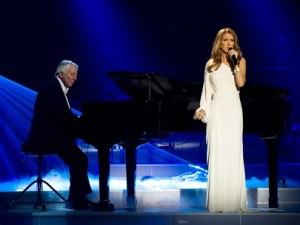
Hire Celine Dion for Your Event
Celebrity Direct Inc. will help you select, book and hire Celine Dion to perform at your corporate event, non-profit event or private performance.
We are always uniquely positioned as your advocate throughout the hiring process and we won’t let you overpay.
Contact us for availability, price and other production details at :
212-521-4115 Tell Us About Your Event
__________
Celine Dion Songs
- “My Heart Will Go On“
- “Because You Loved Me“
- “It’s All Coming Back to Me Now”
- “A New Day Has Come”
- “The Power of Love”
- “That’s The Way It Is”
- “I’m Alive”
- “Beauty and the Beast”
- “Where Does My Heart Beat Now”
- “The Prayer”
__________
Celine Dion Bio
Celine Dion rising from humble beginnings in the small town of Charlemagne, Quebec, has become one of the biggest international stars in pop music history, selling more than 100 million albums worldwide. The youngest in Adhemar and Therese Dion’s family of 14 children, Dion grew up in an environment full of the inherent chaos and material austerity that comes with such a large working-class family. However, the Dion household was also one filled with love for children and music, and her parents and siblings were important figures in the early development of her singing career. Celine Dion began singing in her parents’ piano bar when she was just five years old. By the age of 12 she had written one of her first songs, “Ce N’etait Qu’un Rêve” (“It Was Only a Dream”), which she recorded with the help of her mother and brother and shipped off to a manager named Rene Angelil, whose name they found on the back of an album by Ginette Reno, a popular Francophone singer. After weeks with no response from Angelil, Celine’s brother Michel phoned him and said, “I know you haven’t listened to the tape, because if you had, you would’ve called right away.” Angelil dug up the tape and called the family back the same day to set up a meeting with Celine. When the 12-year-old performed in his office in Montreal, Angelil cried and set in motion the process of making her a Quebecois, and later international star. He mortgaged his house to pay for her first two albums, producing a local number one single. In 1983 she became the first Canadian to have a gold record in France and she won a gold medal at the Yamaha songwriting competition in Japan. Her worldwide reputation was in the making, but success in the United States was not yet forthcoming.
When she was 18, Celine Dion saw Michael Jackson performing on television and told Angelil that she wanted to be a star like him. Angelil’s response was to order her to take 18 months off to remake her image. Dion underwent a physical transformation, cutting her hair, plucking her eyebrows, and having her teeth capped to cover up the incisors that had caused a Quebec humor magazine to dub her “Canine Dion.” She was also sent off to English school to polish the language that would help her to break into the American market. When she emerged from this process, she had made an amazing transformation from teen star to adult chanteuse.
The payoff came almost immediately. Her 1990 breakthrough album, Unison, was released in the U.S. by Epic Records and produced several hit songs, but it was her duet with Peabo Bryson on the theme song of Disney’s Beauty and the Beast that was her true breakthrough. The song reached number one on the pop charts and won both a Grammy and an Academy award. “Beauty and the Beast” was also featured on her second English album, 1992’s Celine Dion, which launched another Top Ten American hit with “If You Asked Me To,” while spawning two additional Top 40 singles, “Nothing Broken But My Heart” and “Love Can Move Mountains.”
During this time there were also important developments in Celine Dion’s personal life. In 1988 Angelil crossed the line from manager to romantic partner when he kissed Dion one night after a show in Dublin. Fearful that fans would find the 26-year difference in their ages unsettling, the couple kept their relationship a secret for several years. But their 1994 wedding in Montreal’s Notre Dame Basilica was celebrated not only by the 250 invited guests, but by millions of fans worldwide.
One of the hardest working stars in show business, Dion continued to record and perform on a schedule that would kill most people. She recorded six albums between 1992 and 1996, when her album Falling Into You took her to a new level of stardom. The recording was a runaway hit, winning Grammys for both Album of the Year and Best Pop Album. 1996 also brought her another honor; she was asked to perform at the opening ceremonies of the Atlanta Olympics. Celine Dion’s longest tenure on the pop charts would come the following year, however, when she recorded “My Heart Will Go On,” the theme song for James Cameron’s blockbuster movie Titanic. “My Heart Will Go On” became omnipresent on the radio as Titanic fever swept the world and when it was featured on her album Let’s Talk About Love it helped propel that recording to the top of the charts. By then, Dion had the power to gather a supporting cast of stars and the album contained an amazing collection of artists, including Barbra Streisand, Luciano Pavarotti, and the Bee Gees. The album would win a host of awards and bring Dion a whole new world of fans.
Her appearance on VH1’s Divas Live special with Aretha Franklin, Gloria Estefan, Mariah Carey, and Shania Twain proved popular as well and helped solidify Dion’s position amongst not only current female pop singers but historical greats like Franklin. The continuing popularity of her recordings and live performances made her 1999 sabbatical seem like a tragedy to her fans, but Dion needed a break after more than a decade and a half of breakneck pace. In 1999, her husband Angelil was diagnosed with throat cancer. While the disease responded well to treatment and went into remission, the illness was a wake-up call for Dion, who decided to put a new emphasis on her family life and announced a temporary retirement so that she could spend more time at home and have a child. After undergoing fertility treatments, she gave birth to a son in January2001. The Collector’s Series…Volume One was released during Dion’s hiatus; it featured many of her best-loved songs, as well as a Spanish-language version of “All By Myself”.
Celine Dion returned to the public eye in a big way in March 2002 with A New Day Has Come. The album debuted at number one in over 17 countries, and was accompanied by a full-scale media blitz. But Dion’s greatest challenge was yet to come.
Despite millions of albums sold, the adoration of fans worldwide, and the validation of her peers, Dion’s success was still hampered by image problems that had dogged her since the days of “Canine Dion.” While many Americans adored her, just as many snickered at her Quebecois heritage and the relative the unorthodoxy of her marriage. There was also the issue of her relevancy to lucrative audiences existing outside of her pop vocal constituency. To combat these issues, Dion and her management made a series of bold moves that attempted to solidify her career, and ensure its continuity as the singer entered her middle 30s.
In early 2002, Dion announced a three-year, 600-show contract to appear five nights a week in an entertainment extravaganza at Caesars Palace, Las Vegas called A New Day. The production would take place in a custom-built, 4000-seat theatre and would feature Dion as the centerpiece of a multimedia program designed and orchestrated by Franco Dragone, the Belgian theatre impresario behind the modern circus phenomenon Cirque Du Soleil. The project united Dion, her label Sony Music, Drangone’s production company Creations du Dragon, Caesars parent Park Place Entertainment, and promoter Concerts West in a landmark, multi-million dollar alliance that hinged on Dion’s ability to put fans in seats five nights a week for three years. In conjunction with the rollout of A New Day was an endorsement deal with German automaker DaimlerChrysler AG worth additional millions. The campaign placed Dion in a series of stylish, black-and-white advertisements promoting the stylish allure of Chrysler’s line of upscale automobiles. The performer also recorded a brand-new song to accompany the spots. Debuting in early 2003, the campaign dovetailed into the March release of One Heart, Celine Dion’s first album since 2001’s A New Day Has Come, which in turn heralded the opening of A New Day on March 25, 2003. That live Las Vegas show was documented on the summer 2004 release New Day: Live in Las Vegas, which was followed a few months later by Miracle, a collection of family songs designed as a tandem book/CD project between Dion and photographer Anne Geddes.
__________
Contact Celine Dion Manager or Agent | You May Ask ?
How can I hire Celine Dion for a corporate event, non-profit or charity event or private performance? How much does Celine Dion cost for a performance, a song, an appearance at an event, party or convention ending gala? What kind of budget would I need for a Celine Dion performance at our event? How can I find out if Celine Dion is available for our event date? How do I contact Celine Dion’s manager? How do I contact Celine Dion’s agent?
We can answer all your questions.
Contact our National Booking Office at 212 521-4115 or send us your questions via email to hire Celine Dion.
__________
Why Celebrity Direct Inc.
Direct Source for Celebrity Performers We are the industry leader in celebrity talent buying and production for corporate events. We work on your behalf to hire the best possible celebrity for your budget and we are uniquely positioned as your advocate in the booking process so you never overpay.
Corporate & Non-Profit Events and Private Performances We are dedicated to private performances, not publicly ticketed events, and we are the experts in this highly specialized entertainment market.
Complete Turn-Key Production Nationwide Event planners work with us in several ways, either choosing from a menu of our services or asking us to produce a show delivered completely turn-key at your event nationwide.